Modern Concrete Interior Design Trends for 2026
Last Updated: November 10, 2026
Quick Summary
Concrete interior design in 2026 is defined by warm minimalism, with sand, clay and warm taupe tones replacing bare grey slabs. Polished concrete and microcement lead the finishes, matched to each room and paired with a sealer suited to how the surface is used.
Warm minimalism is the defining mood of 2026, with grounded palettes replacing bare grey slabs.
Microcement dominates bathrooms, wet-room walls and worktops because it creates no joints.
Polished concrete is the most durable floor option for living areas, hallways and open-plan spaces.
Integral colour is mixed into the concrete before the pour and is not a retrofit option.
Clean sealed or polished floors with a pH-neutral cleaner and never harsh acid.
Planning a concrete interior for 2026?
Symmetry Decorative Concrete crafts polished, stained and microcement finishes for homes and commercial spaces.
Table of Contents
Why Concrete Interior Design Is Defining 2026
Concrete interior design has moved from the builder's yard to the heart of the home. In 2026, polished concrete floors, raw concrete walls and microcement surfaces are appearing in living rooms, kitchens and bathrooms across high-end residential projects. This guide breaks down the looks, finishes and practical choices that matter.
The shift is simple to explain. Homeowners and designers want surfaces that feel honest and last for decades. Concrete can deliver both.
But first, here's what most guides get wrong. They treat concrete as a cold, industrial choice. In practice, modern concrete interiors are warm, tactile and deeply personal. The finish you choose decides everything.
Below, we'll show you exactly how to pick a finish, a colour and a room-by-room approach that works.
Warm Minimalism and Grounded Palettes Replace Cold Grey
Warm minimalism is the defining mood of 2026. Bare grey slabs are out. Grounded palettes are in: sand, clay, mushroom, warm taupe and soft bone.
Concrete takes these tones beautifully. A tinted polish or a penetrating stain shifts the slab from cold to cosy.
Here is how the palette shift looks in practice:
Grey concrete: still used, but now paired with oak and linen
Warm sand and clay tones: the most requested look for living areas
Monochromatic schemes: one tone across floor, wall and worktop
Natural materials: wood, wool and stone set against smooth concrete
The goal is a calm, quiet room. Concrete provides the base. Texture and timber add the warmth.
Concrete Interior Design Ideas for Living Rooms, Kitchens and Baths
Concrete interior design ideas work best when the surface suits the room. A polished floor in a living room behaves very differently from a sealed worktop in a kitchen. Match the finish to how the space is used.
Feature Walls and Fireplace Surrounds
A concrete feature wall anchors a room. It draws the eye and adds depth without clutter.
Fireplace surrounds are a strong choice. A cast or troweled concrete surround frames the fire and pairs well with timber shelving.
Watch out: a feature wall needs a consistent mix and a skilled hand, since uneven pours are difficult to correct once the surface is set.
Concrete in Kitchens and Bathrooms
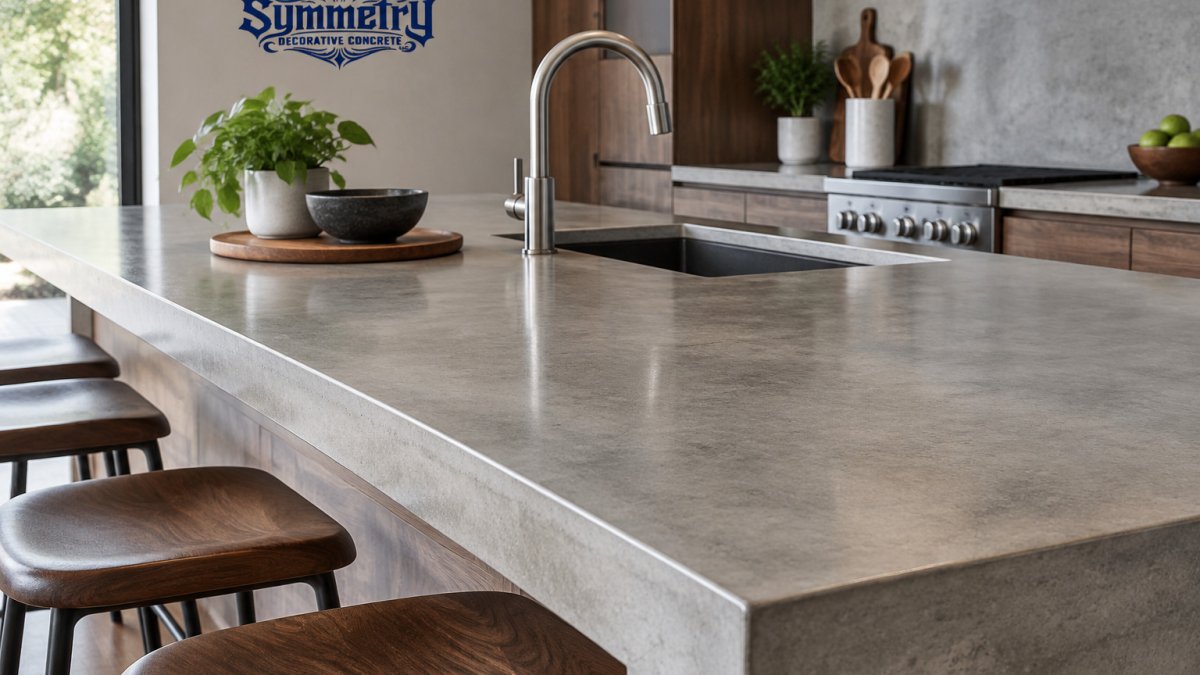
In kitchens, sealed concrete works for worktops, islands and splashbacks. In bathrooms, it suits floors, vanity tops and wet-room walls.
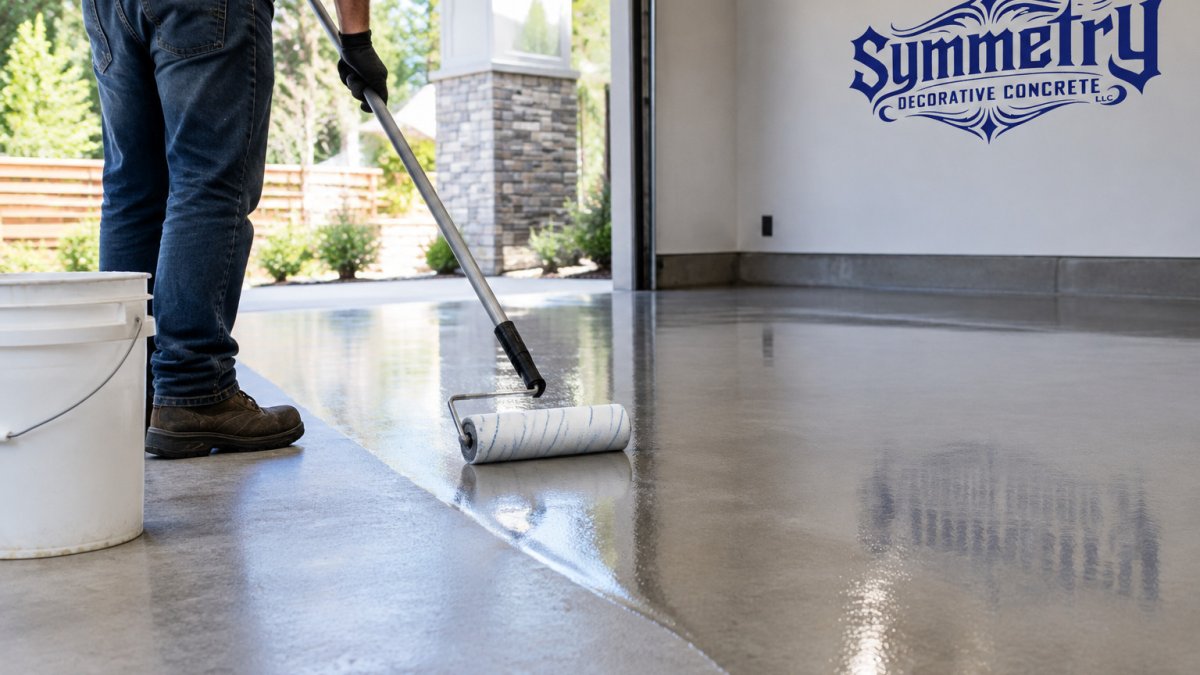
The key is the sealer. Bathrooms and kitchens need a finish that resists water and staining. Ask about the sealer type and how it is maintained before you commit.

For readers who want to see finished overlay projects before deciding, our decorative overlays page shows real examples.
Decorative Concrete Finishes Shaping Modern Interiors
Decorative concrete finishes are the treatments that change how a slab looks, feels and performs. They are the difference between a plain floor and a design feature. Most 2026 trend roundups name these finishes without explaining how to choose between them.
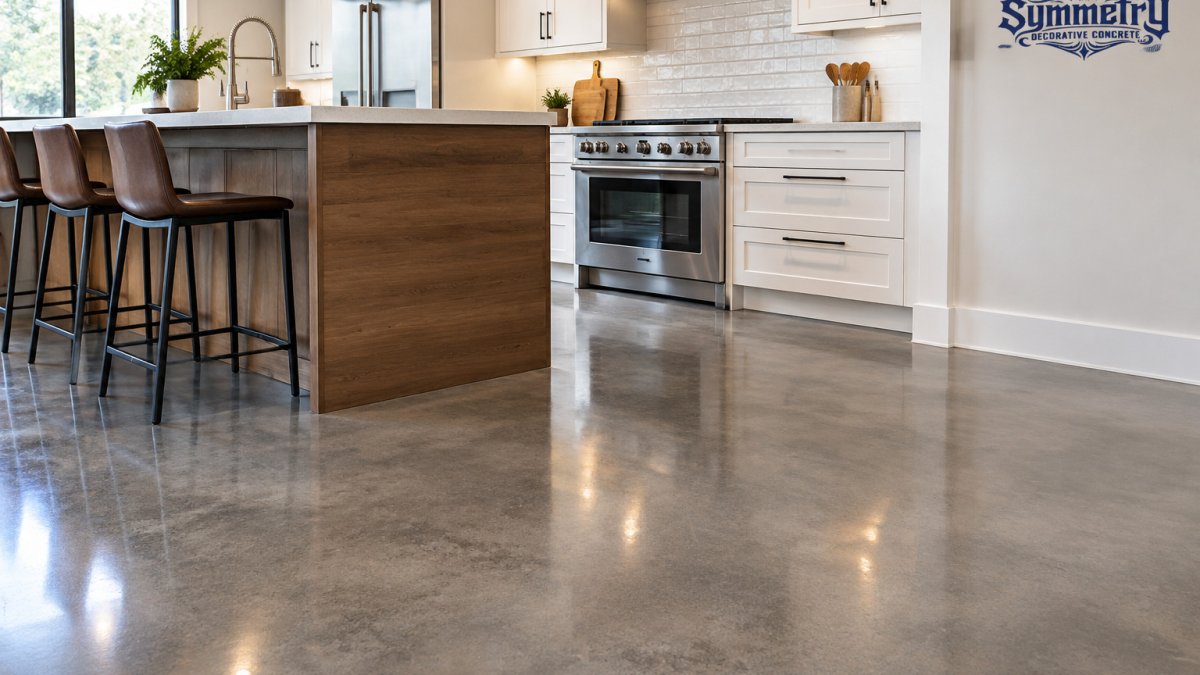
Polished concrete. The slab is ground with progressively finer diamond tooling and honed to a sheen. Aggregate can be exposed or left covered. It is the most durable option for floors and works in living areas, hallways and open-plan spaces.
Microcement. A thin, seamless coating, typically a few millimetres, applied over existing tiles, screed or plasterboard. It creates no joints, which is why it dominates bathrooms, wet-room walls and worktops in 2026.
Stained concrete. Acid or water-based stain is applied to an existing slab to shift colour and add depth.
Board-formed and cast concrete. Timber boards or custom moulds leave a textured, architectural surface. This is the finish behind most concrete feature walls and fireplace surrounds.
Troweled finishes. Hand-worked by trowel for a smooth or burnished surface. Common on walls, surrounds and worktops where a cast or board-formed look is too rustic.
Stamped concrete. Patterned to mimic stone, tile or timber, mostly outdoors. It rarely belongs in a high-end interior in 2026, where the trend is toward honest, seamless surfaces rather than imitation.
A simple selection logic helps. For floors, start with polished concrete or microcement. For walls and fireplace surrounds, start with board-formed, cast or troweled concrete. For worktops and wet areas, start with sealed microcement.
Watch out: the finish and the sealer are two separate decisions. A beautiful finish under the wrong sealer will stain, scratch or dull within a year, always confirm the sealer type alongside the finish.
Our architectural concrete finishes guide explains each type, colour and texture in more depth.
Here is how the main decorative finishes compare on appearance, best use and long-term behaviour.
Finish | Best for | Key difference |
Polished concrete | Floors in living areas, hallways, open-plan spaces | Ground with diamond tooling; most durable floor option |
Microcement | Bathrooms, wet-room walls, worktops | Thin seamless coating over existing substrate; no joints |
Stained concrete | Existing slabs, floors and feature walls | Acid or water-based stain shifts colour and adds depth |
Board-formed and cast concrete | Feature walls and fireplace surrounds | Timber boards or moulds leave permanent textured surface |
Troweled finishes | Walls, surrounds and worktops | Hand-worked smooth or burnished; depends on applicator |
Stamped concrete | Mostly outdoors | Patterned to mimic stone, tile or timber; rare indoors |
Concrete Floor Colors and Stains for a Refined Industrial Look
Concrete floor colors and stains decide the mood of the whole room. A warm sand tone reads soft and residential. A deep charcoal reads refined industrial. The colour method you choose matters as much as the shade, because each method ages differently and suits different projects.
Integral colour. Pigment is mixed into the concrete before the pour. The colour runs through the full depth of the slab, so chips and wear do not expose a different colour underneath. It is the most consistent option for new floors and the best choice when you want a uniform tone across a large area.
Acid stain. The stain reacts chemically with the minerals in the slab, producing mottled, earthy tones with natural variation. It is the classic route to a refined industrial look because the variation reads as patina rather than flaw.
Water-based stain. More predictable colour and a wider range of shades, including the warm sand, clay and mushroom tones driving 2026 palettes. It sits on the surface rather than reacting with it, so it is easier to control but can wear differently in high-traffic areas. It suits retrofits and projects where a specific shade must be matched.
For a refined industrial look, the colour logic is contrast, not saturation. Pair a mid-grey or charcoal floor with warm wood and black metal details, and let the concrete stay quiet. A common pattern is a charcoal or mid-grey base with one warm accent material, oak, brass or leather, rather than several competing tones.
For warm minimalism, invert the logic. Choose a sand, bone or warm taupe tone and pair it with linen, wool and pale timber. The floor becomes the grounded base rather than the feature.
Watch out: colour samples viewed indoors under artificial light can shift dramatically in daylight. Always approve a sample panel in the actual room before committing to a full pour or stain.
To browse actual shades before choosing, view our colour charts.
Texture, Material Contrast and Hidden Detail
Texture is where concrete interiors come alive. A smooth floor against a rough wall. A honed worktop against fluted millwork. Material contrast makes a room feel designed, not decorated.
The 2026 details worth noting:
Fluted and reeded timber against smooth concrete
Hidden texture: subtle grooves and shadow lines in walls
Bold geometry in cast concrete panels
Tactile surfaces that invite touch, not just sight
What most guides miss is restraint. One strong texture per room is enough. Pile on three and the space feels busy.
Concrete Floor Maintenance and Long-Term Durability
Concrete floor maintenance is simpler than most people expect, but it is not zero-effort. A sealed or polished floor needs the right routine to stay looking sharp.
Here is what works:
Sweep or dust-mop regularly to remove grit
Clean with a pH-neutral cleaner, never harsh acid
Reseal high-traffic areas on a schedule your installer sets
Wipe spills promptly, especially in kitchens and baths
Use felt pads under furniture legs
Durability is concrete's real strength. A well-finished slab can last for decades. The finish and sealer decide how well it ages.
For a full routine, read our guide on how to maintain decorative concrete surfaces.
Request a Consultation for Your Concrete Interior
Choosing a concrete finish is a design decision and a technical one at the same time. The right call depends on the room, the look you want and how the surface will be used.
At Symmetry Decorative Concrete, we bring together traditional honest labour and specialised techniques, with a focus on exact execution and reliable results. We serve discerning clients seeking high-quality, expertly executed concrete finishes.
If you have a specific vision, bring it to us and we will talk through finishes, colours and what fits your space. We will talk through finishes, colours and what fits your space.
Ready to define your space? Contact our team to request a consultation for your concrete interior.
Concrete rewards good planning. The finish, colour and sealer you choose now shape how the room looks and lasts for years. If you want a surface that holds up and looks the part, get expert eyes on it early. Symmetry Decorative Concrete offers specialised techniques, exact execution and a dedication to honest, reliable results. Get started with Symmetry Decorative Concrete and request a consultation for your concrete interior.
Frequently Asked Questions
What are the concrete trends for 2026?
The strongest direction for 2026 is warm minimalism built on concrete rather than cold grey. Expect grounded palettes of sand, clay and mushroom, raw and polished concrete surfaces mixed with oak and fluted millwork, and seamless microcement walls that remove visible joints. Texture is doing the decorative work: reeded surfaces, tactile finishes and subtle tonal variation instead of high-contrast pattern. Concrete interior design is moving toward calm, tactile spaces where the material reads as crafted rather than industrial.
How do you maintain decorative concrete floors?
Concrete floor maintenance is simpler than most clients expect, but it is not zero-effort. Sweep or dust-mop regularly to remove grit that dulls the surface, and clean with a pH-neutral cleaner rather than acidic or abrasive products. Reseal on the schedule your installer recommends, since the sealer is what resists stains and wear.
Are polished concrete floors still in style in 2026?
Yes, but the finish has changed. Fully mirror-polished grey slabs now read as dated in high-end residential work. The 2026 version is a honed or satin finish with visible aggregate, warm undertones or a subtle stain, often paired with timber, wool and plaster to soften the space. Polished concrete remains a practical choice for high-traffic commercial interiors because it is durable and easy to clean. The decision comes down to sheen level and color, not whether concrete itself is still current.
What colors pair well with concrete interiors in 2026?
Warm neutrals do most of the work: bone, oatmeal, clay, mushroom and soft terracotta all stop concrete from feeling cold. Pair those with natural wood tones, especially oak and walnut, plus brushed brass or bronze for a refined edge. Monochromatic schemes work well when you vary texture instead of color. If you want contrast, deep olive or charcoal adds depth without the harshness of pure black. Concrete floor colors and stains can also be tinted warm to support the palette from the ground up.
Comments