High Traffic Commercial Concrete Flooring Guide
Last Updated: October 23, 2026
Quick Summary
High traffic commercial concrete flooring is a poured, finished slab specified to withstand concentrated foot traffic, rolling loads, and spills in retail, hospitality, healthcare, and industrial settings. Polished concrete, epoxy coatings, and sealed concrete are the three dominant finish families, and each should be matched to the dominant traffic load rather than chosen for appearance. Because the wearing surface is the slab itself, wear is gradual rather than catastrophic.
Polished concrete delivers the strongest abrasion and impact resistance because the wear surface is the densified slab, not a film.
Epoxy performs best in chemical and washdown areas but can flake when substrate moisture is high.
Specify slip resistance by zone, since wet and transitional areas need a different surface profile than dry floors.
Substrate moisture testing is mandatory before any coating; exceeding manufacturer limits is the leading cause of coating failure.
Maintenance frequency should follow traffic, not a calendar, with daily attention at busy entrances.
Table of Contents
Why High Traffic Commercial Concrete Flooring Wins on Durability
Commercial Concrete Floor Finishes Compared: Polished, Epoxy, and Sealed
Performance Specifications and Testing: How to Compare Finishes Objectively
Matching Test Data to Service Conditions
Commercial Epoxy Flooring: Where It Performs and Where It Fails
Polished Concrete Floors for Commercial Spaces: Abrasion and Impact Resistance
Matching the Floor to the Traffic: Selection Criteria That Matter
Traffic-Specific Recommendations
Selection Criteria in Practice
Lifecycle Cost, Installation Disruption, and Project Planning
Commercial Concrete Floor Maintenance That Protects the Investment
Conclusion: Specifying Concrete Flooring for the Long Term
Frequently Asked Questions
Why High Traffic Commercial Concrete Flooring Wins on Durability
High traffic commercial concrete flooring is a poured, finished slab specified to withstand concentrated foot traffic, rolling loads, and spills in retail, hospitality, healthcare, and industrial settings.
Carpet tile and luxury vinyl tile sit on top of the substrate; when they fail, you replace them.
Durability combines abrasion, impact, and moisture resistance. A floor that resists scuffing but spalls under a dropped pallet is not durable, nor is one that shrugs off impact but stains permanently from a chemical spill.
Key Takeaway The durability advantage of concrete comes from the slab, not a coating. Any finish applied on top is a wear layer with a finite service life, so specify the substrate and the finish as two separate decisions.
Commercial Concrete Floor Finishes Compared: Polished, Epoxy, and Sealed
Three finish families dominate commercial concrete flooring. Polished concrete mechanically grinds and densifies the surface. Epoxy flooring applies a resin coating bonded to the substrate. A sealer is a thinner film that limits moisture ingress and staining.
Each has a place and a failure mode. The table below compares them on the criteria that decide most commercial projects.
Finish | Wear Mechanism | Best For | Main Limitation |
Polished concrete | Mechanical grinding and densification | High foot traffic, retail, lobbies | Limited chemical resistance without sealer |
Epoxy coating | Resin film bonded to substrate | Chemical exposure, washdown areas | Can flake if substrate moisture is high |
Sealed concrete | Thin film or penetrating sealer | Budget-conscious, light industrial | Requires more frequent reapplication |
These are not interchangeable upgrades. Epoxy is a coating, so its performance depends almost entirely on surface preparation and slab moisture control.
Performance Specifications and Testing: How to Compare Finishes Objectively
Most finish comparisons rely on broad claims, "durable," "chemical resistant," "long-lasting", that cannot be verified.
Abrasion resistance. The primary wear criterion for foot and rolling traffic.
Impact resistance. Relevant for dropped objects or forklift traffic.
Chemical resistance. For epoxy and sealed systems, resistance is assessed by immersion or spot testing with specific reagents.
Moisture vapor emission. Substrate moisture testing is mandatory for any coating. Common tests are ASTM F1869 (calcium chloride) and ASTM F2170 (in-situ relative humidity).
Watch Out A finish that performs well in one test can fail in service if the test conditions do not match the actual environment. Abrasion test results on a clean, dry sample do not predict performance under grit, moisture, and chemical exposure. Use test data to compare products, but specify based on the actual service conditions.
Matching Test Data to Service Conditions
Performance specifications matter only in how they map to the service environment. A polished concrete floor in a retail concourse needs high abrasion resistance and adequate slip resistance in wet zones.
Specifiers should ask for test reports, not marketing claims. A manufacturer that cannot provide ASTM results for abrasion, impact, chemical resistance, and slip resistance is asking the buyer to take durability on faith, and for high-traffic commercial projects, faith is not a specification.
Commercial Epoxy Flooring: Where It Performs and Where It Fails
Commercial epoxy flooring performs best where the floor faces chemical spills, washdown, or heavy rolling loads on a sound, dry substrate.
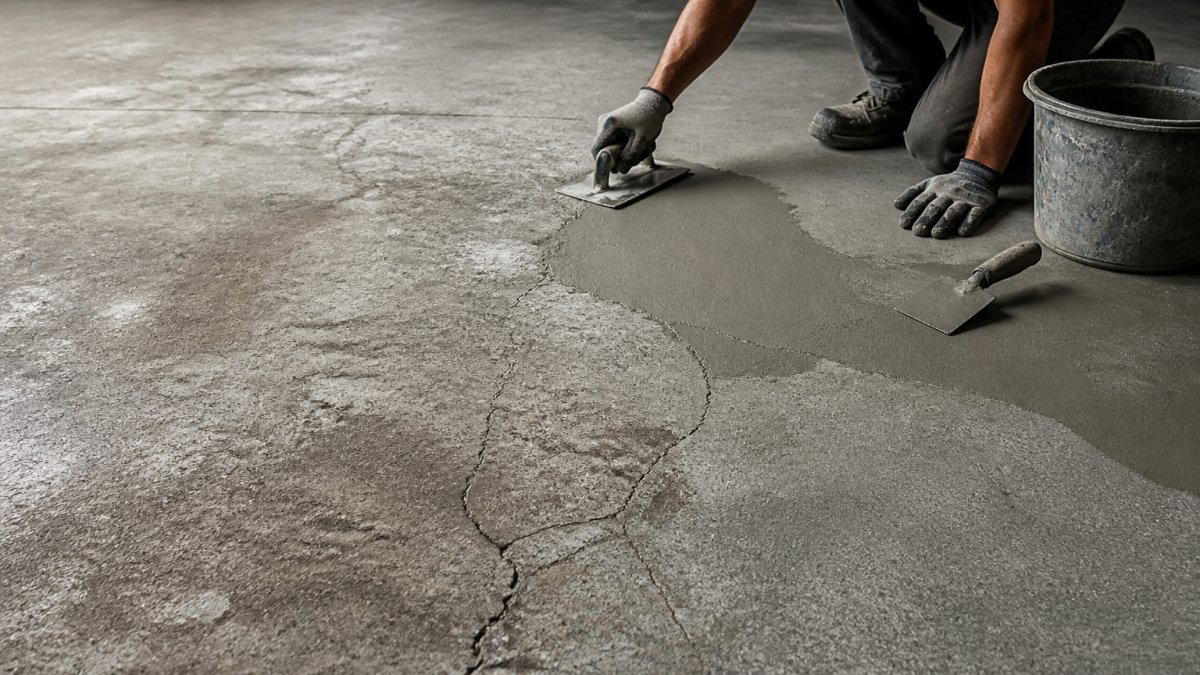
The failure pattern is consistent. A coating bonds mechanically to a prepared profile. If the substrate is contaminated with oil, curing compounds, or dust, the bond is compromised before the first coat cures.
Epoxy also has a service life. Under abrasive foot traffic it wears first at the high points and main circulation paths. That wear is visible and repairable, but not permanent the way a polished slab is.
Watch Out Applying epoxy over a slab without testing for moisture vapor emission is a common cause of flaking. The consequence is not cosmetic: a failed coating means the floor must be stripped and the substrate re-prepared, which doubles the disruption to a working facility.
Where epoxy earns its place: back-of-house kitchens, service corridors, maintenance bays, and any area where a chemical spill is a when, not an if.
Polished Concrete Floors for Commercial Spaces: Abrasion and Impact Resistance
Polished concrete floors for commercial spaces deliver the strongest abrasion and impact resistance of the three finish families because the wear surface is the densified slab, not a film. Grinding exposes aggregate and hardens the surface through densification, so there is no coating to chip, peel, or wear through.

Impact resistance follows the same logic.
One caveat: polished concrete is not automatically slip resistant, and a high-gloss finish can become slick when wet. Slip resistance is a specification decision, not a byproduct of polishing.
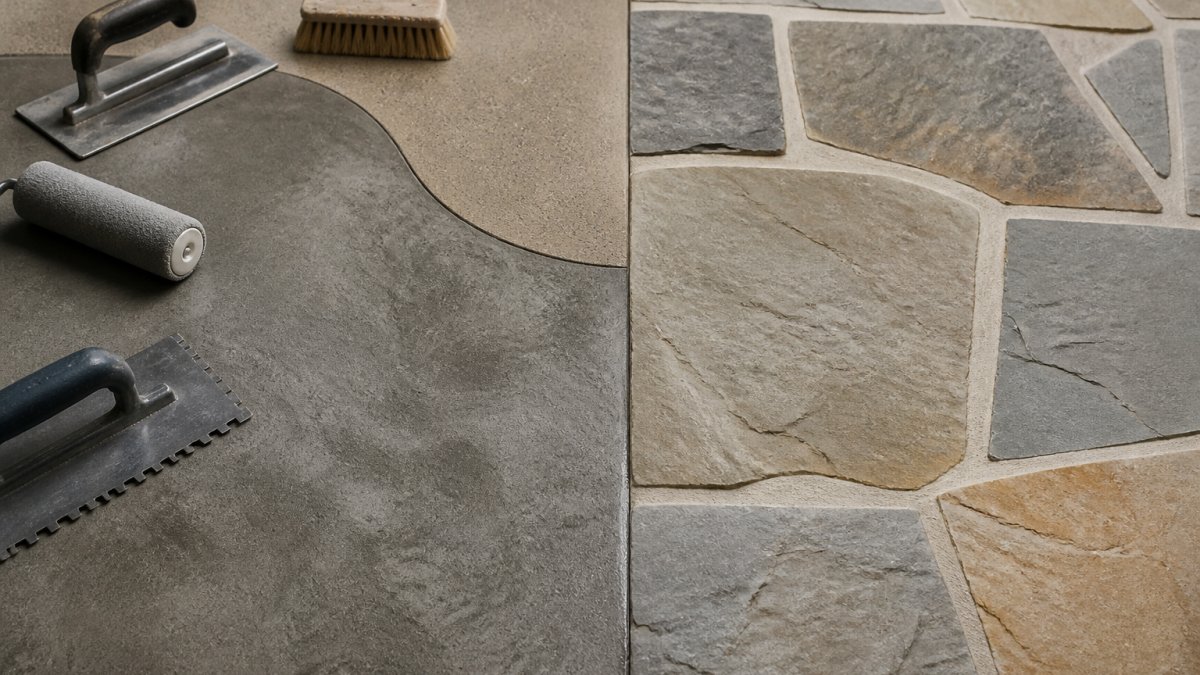
Stained concrete and terrazzo-style finishes sit within this family too, offering the durability of concrete with a defined visual identity under the same traffic conditions.
Matching the Floor to the Traffic: Selection Criteria That Matter
Traffic profile should drive the finish specification, and most selection errors trace back to skipping this step. A floor specified for a quiet office corridor will fail in a distribution center, and a heavy industrial system is overkill for a boutique retail floor. "High traffic" is not one condition: pedestrian traffic, rolling carts, forklifts, and vehicles impose different stresses, and the finish should match the dominant load.
Work through these criteria in order before choosing a finish:
Traffic type: foot traffic only, or mixed with rolling loads and pallet trucks
Chemical exposure: routine cleaning agents only, or spills of solvents, oils, or acids
Moisture conditions: interior slab on grade, elevated slab, or exposure to washdown
Slip resistance needs: dry circulation only, or wet and transitional zones
Aesthetic requirement: exposed aggregate, stained, or a uniform matte or gloss
Downtime tolerance: how long the facility can be out of service during installation
Clients underestimate the last criterion most. It shapes the entire project plan, not just the finish choice.
Traffic-Specific Recommendations
Pedestrian traffic (retail, hospitality, healthcare, offices). Polished concrete with a densified surface and a slip-resistant profile in wet zones is the default. Abrasion resistance is the key specification, because foot traffic wears gradually along circulation paths.
Rolling carts and light equipment (warehouses, big-box retail, logistics). The finish must resist abrasion and point loads from caster wheels.
Forklifts and heavy rolling loads (distribution, manufacturing, cold storage). Impact and point-load resistance govern here.
Vehicle traffic (parking, service bays, drive-throughs). The most demanding category combines abrasion, impact, and exposure to de-icing salts, oils, and fuel.
Pro Tip Specify slip resistance by zone, not by floor. Transitional areas near entrances and any washdown zone need a different surface profile than a dry retail floor. Writing one blanket slip requirement across a whole facility usually means over-specifying the dry areas and under-specifying the wet ones.
Selection Criteria in Practice
Once the traffic type is identified, the remaining criteria narrow the finish choice quickly. Chemical exposure rules out unsealed polished concrete in washdown or fuel-exposure areas. Moisture conditions determine whether a coating is viable at all. Slip resistance dictates the surface profile and aggregate broadcast.
The most common specification error is choosing a finish for its appearance and then discovering it cannot handle the traffic. The second is over-specifying a heavy-duty system for a light-traffic area, which adds cost without adding service life. The best finish matches the dominant load, not the showroom.
Lifecycle Cost, Installation Disruption, and Project Planning
Lifecycle cost is where concrete flooring separates itself from resilient alternatives, but only when maintenance is planned rather than reactive.
Resilient flooring such as luxury vinyl tile and carpet tile carries a predictable replacement cycle.
Installation disruption deserves its own plan. Concrete work generates dust, requires cure time, and often needs the space empty. Phasing by zone lets a facility stay open, though it extends the schedule.
Pricing for any specific project depends on square footage, substrate condition, finish selection, and access. Ask for a site assessment before committing to a schedule.
Commercial Concrete Floor Maintenance That Protects the Investment
Commercial concrete floor maintenance is simpler than most resilient flooring, but it is not nothing. Routine care removes grit before it abrades the surface and catches spills before they stain.
For polished concrete, dust mop to remove abrasive grit and damp mop with a neutral cleaner; avoid acidic cleaners, which dull the surface over time.
Maintenance frequency should follow traffic, not a calendar. A busy entrance needs daily attention; a back corridor may need it weekly. Build the schedule around the zones that actually take the load.
Repair is part of the plan too.
Key Takeaway The cheapest maintenance decision is early intervention. A small repair caught in the first month costs a fraction of a full resurfacing, and it keeps the floor's long-term performance intact.
Conclusion: Specifying Concrete Flooring for the Long Term
The specification decision outlives the project team that made it. Align the substrate, the finish, and the traffic profile, and the floor performs for decades with routine care. Misalign them, and you inherit a maintenance headache.
Symmetry Decorative Concrete works with architects, contractors, and property managers to specify decorative and traditional concrete finishes that hold up under real traffic.
Request a consultation with Symmetry Decorative Concrete to assess your space and specify the right finish for your traffic profile.
Frequently Asked Questions
How do you choose flooring for a high-traffic commercial space?
Start with the traffic type, not the look. Count daily footfall, note whether trolleys, pallets, or carts roll across the surface, and check for moisture, chemical spills, or grease. Then match the finish: polished concrete for abrasion resistance and low maintenance, epoxy coating for chemical and stain protection, and sealed concrete where budget is tight. Confirm the concrete substrate is sound and dry before specifying any system, because surface preparation decides long-term performance more than the finish itself.
Which concrete finish is best for a busy commercial floor?
Polished concrete floors for commercial spaces handle heavy foot traffic and abrasion well because the surface is mechanically ground and densified rather than coated. Commercial epoxy flooring suits areas exposed to chemical spills, grease, or heavy cleaning, but it can flake if the substrate is damp or poorly prepared. Sealed concrete is the lowest-cost option and works in back-of-house zones. The right choice depends on traffic volume, spill risk, and how much maintenance the facility can absorb.
Is epoxy flooring good for commercial use?
Yes, in the right conditions. Commercial epoxy flooring forms a seamless, chemical-resistant protective coating that resists spills, stains, and heavy cleaning routines, which makes it common in kitchens, workshops, and healthcare settings. The limitation is moisture: epoxy bonds poorly to a damp concrete substrate, and trapped vapour causes bubbling and flaking. Test the slab for moisture before installation, and specify a moisture-tolerant primer or a different finish if readings are high.
How can commercial concrete floors be made safer in wet or high-traffic areas?
Slip resistance comes from the surface profile, not from the shine. Specify a textured or profiled finish, or add an anti-slip aggregate to the final coat in entrances, wash-down zones, and ramps. Keep drainage and matting at doorways so water never pools on the walking surface. For polished concrete, a matte or low-sheen finish with a penetrating sealer gives better grip than a high-gloss polish. Review slip performance with your installer against the accessibility requirements that apply to your building.
How should high-traffic commercial concrete flooring be maintained?
Routine maintenance is simple: dust-mop or sweep daily to remove grit that abrades the surface, damp-mop with a neutral pH cleaner, and avoid harsh acids or aggressive strippers. Commercial concrete floor maintenance frequency depends on traffic; entrances and food service areas usually need daily cleaning, while showrooms may need it two or three times a week. Reapply a penetrating sealer or topical coating on the schedule your installer recommends, and repair chips or flaking early before water reaches the substrate.
Request a consultation
Add symmetrystamped.com as a preferred source on Google →

Comments